Our Blog

See Your Dream Smile Before You Start, with Zach Frazier Orthodontics

July 6th, 2022
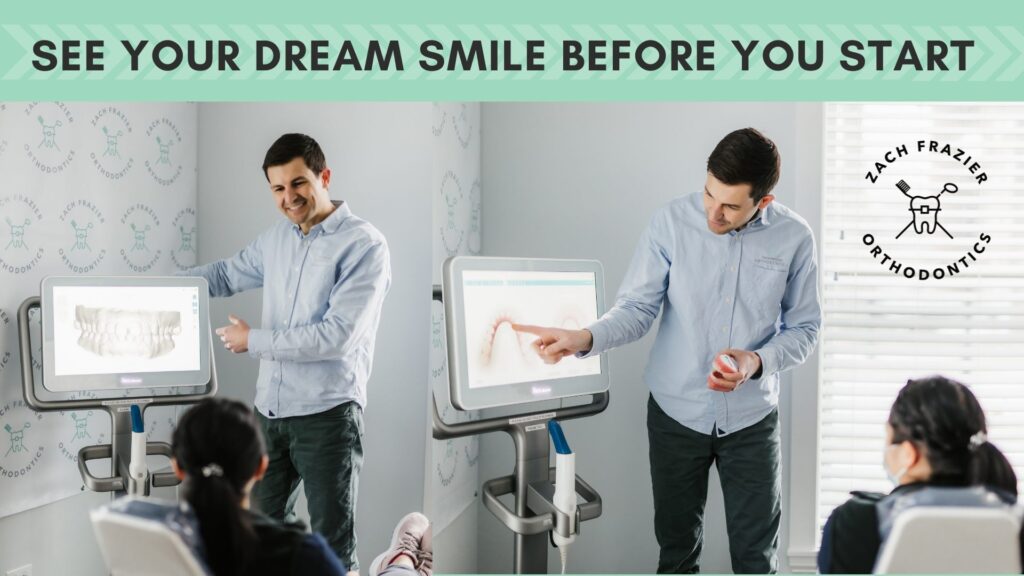
Ever wonder what your smile will look like once you close that annoying gap or fix the crowding? While a doctor can explain the process of straightening your teeth and adjusting your bite, it may be hard to envision what YOUR teeth will actually look like once treatment is complete. Well, at ZFO we have great news for you – we have powerful technology to show you what your future smile will look like! With a clear picture of the expected results, you can  judge for yourself if orthodontic treatment is right for you or your child.

How are we able to show you the result before starting treatment? We use a high-tech iTero intraoral scanner to take a 3D model of your mouth (that’s right – no more goopy impressions!) and then we use software to move your teeth right in front of you on the screen. The software allows us to show you esthetic changes as well as bite correction changes that are needed for an excellent result.

At every complimentary consultation, I use our Smile Simulator technology to show patients what their final outcome will look like. Not only does it help you feel confident that the 6-24 month journey you’re about to embark on will be worth it, but it gives you and/or your child incentive to focus on the end goal with good participation. Everyone knows what we’re working towards from the very start, and seeing is believing.

I became an orthodontist for many reasons, but one of them is that I love building relationships and helping increase their self-confidence in patients. I see providing this glimpse into the future as an important part of each of those journeys. Knowing what our shared goal is helps me connect with you and helps you take pride in the treatment. 

If you’re considering orthodontic treatment for your child, tween or teen (or yourself), we’d love to meet. Zach Frazier Orthodontics is a no pressure practice and all consultations are complimentary. 

Come see us and see what the smile of your dreams might look like today. 

To schedule that complimentary consultation, click or call below.

-Dr. Zach Frazier

CLICK BELOW OR CALL US TODAY FOR A COMPLIMENTARY CONSULTATION. 

We were honored to recently be featured in DMG DENTALPROFILES!

October 25th, 2021

We were honored to recently be featured in DMG DENTALPROFILES! You can view it here (page 59) or read below!


Can you share your journey to becoming an orthodontist? 

I started my education here in Downers Grove at Highland Elementary School, Herrick Middle School, and Downers Grove North. Growing up, I never had my thoughts set on being an orthodontist; instead, I thought about doing something that involved healthcare. My parents are both in healthcare, and I had many extended family members involved in that field as well. After high school, I studied molecular biology and Spanish at The University of Illinois, and after graduation, I began working for an oral surgeon. After this experience, I decided to apply to dental school at the University of Illinois at Chicago (UIC), followed by my orthodontic specialty degree from Washington Hospital Center in Washington, D.C. I was drawn to orthodontics in dental school as I felt like it was the “fun” part of dentistry - no numbing, no needles, etc. I enjoyed the cosmetic and artistry part of orthodontics.

What makes Zach Frazier Orthodontics unique?

A few things make us unique. First, our mission is to serve and improve the community, which is why we are so heavily involved in supporting many schools and organizations locally. Internally, we are seriously dedicated to customer service and communication. We believe there is nothing more important to us than making our patients and their families happy, and we are willing to go above and beyond to prove this. Service, communication, and transparency are sometimes overlooked in the medical field, but those are our key priorities. Straight teeth and a healthy bite are the expectation with any orthodontic office, but we strive to make the experience better than anyone else.

As heavily involved in the community as you are, what are some of the organizations you support and why? 

In the six years that we have been in business, we have made over $40,000 in contributions to 36 community groups/schools/organizations. There are so many to name! We have made many contributions to District 58 & District 99 schools and the private schools in Downers Grove. I attended District 58 & 99 schools growing up, and I love giving back to the schools that helped shape my future. We also have provided support for some schools in the towns surrounding Downers Grove. We are a huge sponsor for many Downers Grove area sports clubs, including Roadrunners soccer, Rebels softball, Hitmen baseball, Fury baseball, Longshots baseball, Panthers football, Downers Grove Youth Baseball, and many more. It is an incredible opportunity to support so many kiddos who come into our office and sponsor their teams. Within Downers Grove, we also support many community groups, such as Downers Grove Junior Woman’s Club, Navigate Adolescence, and The Grove Foundation.

Besides bringing beautiful smiles to your patients, what is the most rewarding part about being an orthodontist? 

One of the most rewarding parts is meeting so many great people. Our dental specialty is very social, and seeing families come in over many years is fun. I love seeing old classmates in the office with their kids.

As a native of Downers Grove, what was your experience growing up here? 

I loved growing up in Downers Grove. I grew up watching movies at the Tivoli with my family, getting ice cream at Every Day’s a Sundae, and heading to McCollum for soccer games. There are so many great memories of playing for Downers Grove North soccer at Carsten’s Field. One thing that is awesome about Downers Grove is that many of my friends who share those memories still live here, too, and we are now reliving those memories with our kids. That’s one of the unique things about Downers Grove – people come back here to settle down and raise their kids, and I think that says a lot about the vibe of this town.

CLICK BELOW OR CALL US FOR A COMPLIMENTARY CONSULTATION

Tips for wearing a mouthguard with braces

February 22nd, 2021

Adolescents are active, so it is no surprise that there are plenty of questions about mouthguards when it comes to orthodontic treatment. In general, a mouthguard is a great investment for protecting the teeth, especially in high-contact sports. They should be considered for many sports and activities, even if braces are not being worn. Here are some common questions and answers:

  • Can you wear a mouthguard if you have braces?

    Yes, you can wear a mouthguard when you have braces. There are special mouth guards that are made specifically to fit over braces.

  • What sports require a mouthguard with braces?

    Many high school sports associations require a mouthguard for football, hockey, field hockey, lacrosse, and wrestling. The ADA also recommends a mouthguard for other contact sports like basketball and martial arts, as well as other limited contact sports such as baseball, softball, and extreme sports.

  • Is it recommended to use a mouthguard while in braces?

    Unless specifically required by your sports association, it can be a personal decision based on your comfort level and ability to breath adequately while performing. The benefit of a mouth guard is it will limit damage to teeth and soft tissues around the mouth when worn properly. Not only will it help protect the teeth, but it will protect the lips and cheeks from injury from any orthodontic appliances.

  • What is the best mouthguard for braces?

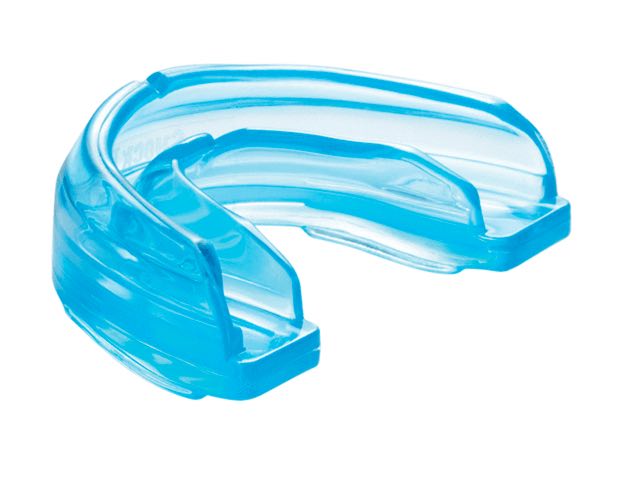
    In our office, we have found that the Shock Doctor Braces Mouthguard has worked well for many patients. It has a strap so that it can be used in sports like football. The strap can also be removed so that it can be used in sports like basketball.

    [caption id="attachment_308" align="alignleft" width="300"] Shock Doctor ® Braces mouthguard[/caption]

  • Can you use a boil and bite mouthguard with braces?

    No, you should not use a build and bite mouth guard with your braces. It may wrap around the braces and get stuck in place, or cause damage to the braces. Also, keep in mind that the teeth are continuing to move, so you do not want to have a mouthguard specifically molded to your teeth as they are changing.

  • Can I use a custom made mouthguard while in braces?

    No, you will not likely be able to use a custom mouthguard since your teeth are still moving. The mouthguard will not fit for the duration of the treatment, and it may get stuck on the braces if it is forced in place.

  • Where can I get a mouthguard for braces?

    You can find a mouthguard for braces online or in some sporting goods stores. Some orthodontists may also have them in their office for patients. At Zach Frazier Orthodontics, we have the Shock Doctor Braces Mouthguard available in office for our patients.

  • Can I wear a mouthguard with Invisalign?

    If you are in Invisalign treatment, you should still wear a mouthguard for sports if it is recommended by your association or a sport with significant contact or injury risk (football, basketball, hockey). You can remove your Invisalign and use a general one-size-fits-all mouthguard while playing the sport. You will not be able to use a custom fitting or boil and bite mouthguard as your teeth are still moving. If you are in a non-contact or limited-contact sport, you should continue to wear your Invisalign while you are playing the sport.

  • Can I wear a mouthguard with a palatal expander?

    Yes, you can wear a mouthguard with a palatal expander. It will need to be trimmed and adjusted around the expander to allow it to fit properly.

I hope this is helpful to provide some insight on mouthguard recommendations for braces. As always, if you need more information, please reach out to our office anytime - we are happy to help : )

Tips for Managing TMJ Pain During Orthodontic Treatment: Questions and Answers

February 10th, 2021

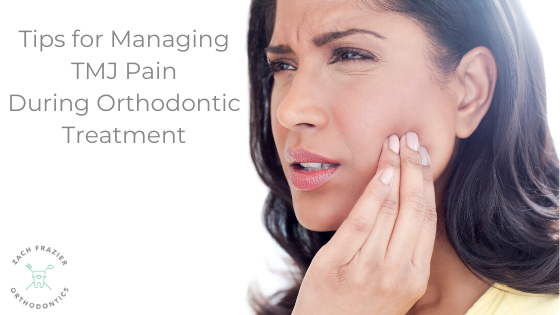
According to the National Institute of Dental and Craniofacial research, the prevalence of TMJ problems (also known as temporomandibular joint and muscle disorder) is between 5% - 12% of the population. It is more common in females than males, and tends to affect younger people more often.

While orthodontic treatment does not cause TMJ issues, studies also show that it cannot prevent or treat TMJ pain either. Here are some common questions that you may have if you are in orthodontic treatment and are now experiencing some jaw joint pain.

What does TMJ stand for and what is it?

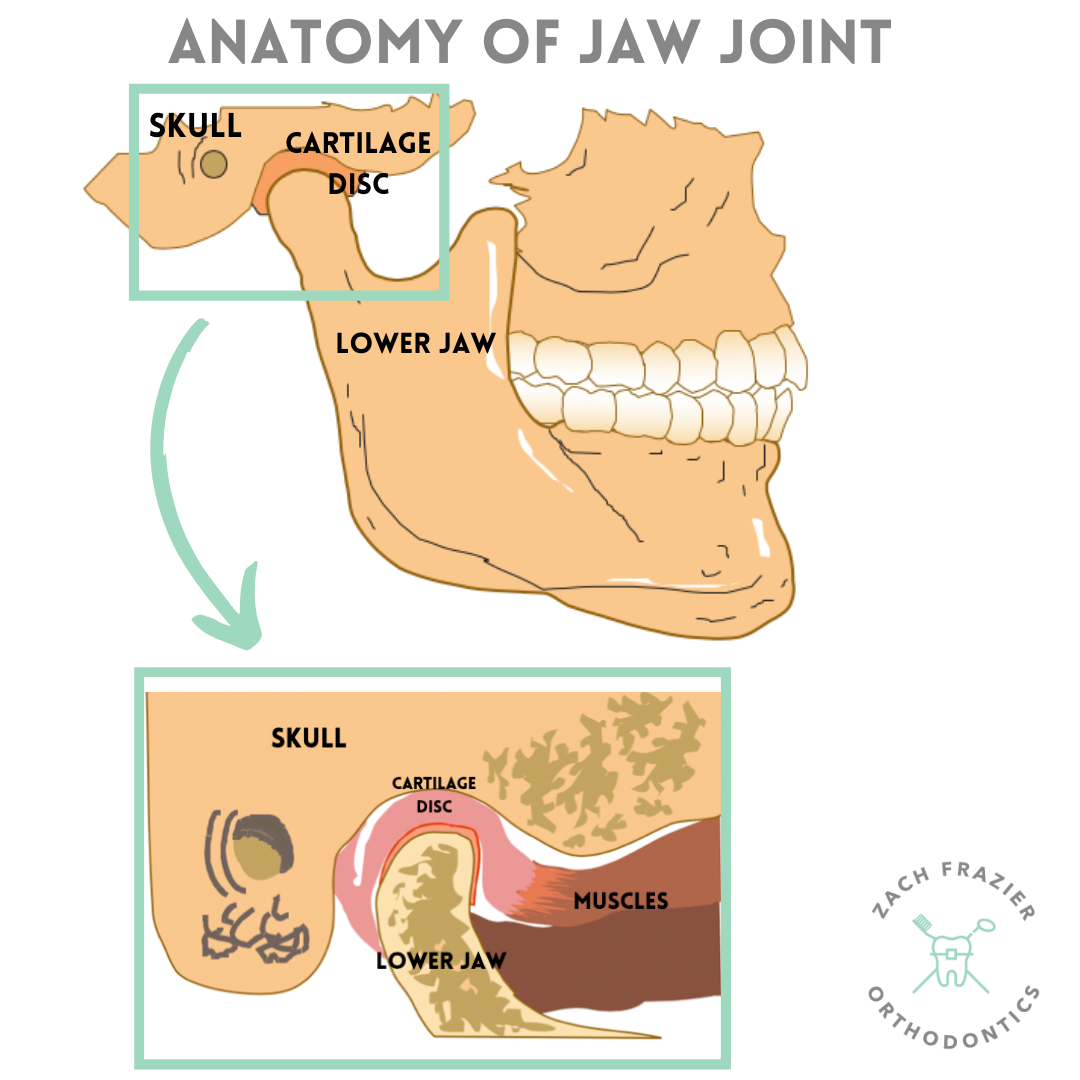
  • TMJ stands for temporomandibular joint. It is located directly in front of your ears, and it is where your lower jaw hinges upon opening and closing.

What are TMJ problems?

  • TMJ problems include clicking/popping joints, painful joints, or restricted jaw movement. TMJ problems may vary in severity from mild pain to severe pain, and the pain may be a temporary pain or a constant pain. TMJ problems may be related to the actual joint (bones and ligaments), or it may be related to the muscles around the joint.

What causes TMJ problems?

  • TMJ problems may be caused by an injury to the face or jaw, grind/clenching of teeth, stress, muscle fatigue or overuse of the jaw joint. Additionally, it is linked to hormonal changes in women that cause laxity of the ligaments in the jaw joint. TMJ problems are most common in teenage girls and young women.

What can I do to improve my TMJ problems or TMJ pain?
Most TMJ problems can be managed by these conservative measures:

  • Maintain a soft diet, and avoid chewy food and chewing gum.
  • Use warm, moist heat on the jaw muscles to increase blood flow and massage the muscles. Alternate the warm moist heat with an ice pack on the joint area which will help reduce inflammation of the joints.
  • Use anti-inflammatory medications to help reduce pain and inflammation. Ibuprofen is the most common, but you should consult your physician with which anti-inflammatory medication is best for you.
  • Avoid clenching your teeth by setting up reminders to keep your teeth apart and jaw muscles relaxed.
  • Monitor your stress and manage it to avoid muscle tension and clenching.

What if my symptoms do not improve with conservative therapy?

  • If your symptoms are not improving, a referral will be made to another doctor who specifically manages TMJ problems. They may recommend more diagnostic imaging (like an MRI) to evaluate the jaw joint to find the cause of the problem. In some cases, a night guard may be recommended to help alleviate some pain.

Can I continue my orthodontic treatment?

  • In some cases, orthodontic treatment may be paused for a period of time, and occasionally it may be discontinued depending on the circumstances. The recommendations are on a case by case basis.

If you have any other questions, please let your orthodontist know. More often than not, a little patience and conservative measures will improve the TMJ pain, so hang in there : )

4909 Forest Ave
Downers Grove, IL 60515
(630) 541-3696 Office Hours